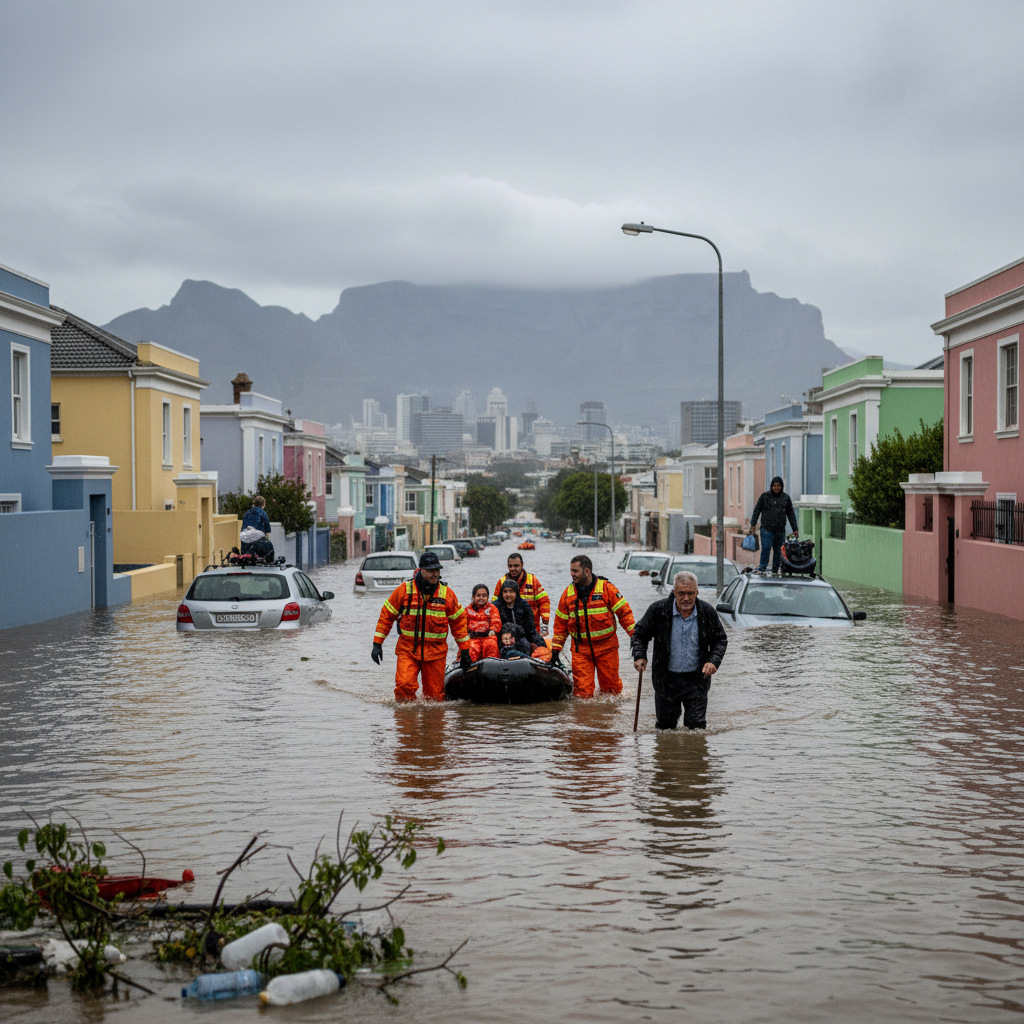
On May 7, 2026, the Western Cape Government, led by Acting Premier Dr. Ivan Meyer and Acting Minister of Local Government Anroux Marais, responded decisively to severe weather conditions that have struck the region, significantly impacting the Garden Route district and parts of the Central Karoo. The South African Weather Service had issued urgent warnings regarding an intense cut-off low system which brought with it disruptive rainfall and strong winds, prompting fears of flooding and infrastructure damage.
As reports began to come in of localized flooding and road closures, authorities swiftly activated a Joint Operations Centre, coordinating multi-agency responses to manage the unfolding emergency. Tragically, amid the chaos, one life was lost; Ms. Lauren Fredericks, a dedicated social auxiliary worker at the Western Cape Department of Social Development, died during the severe weather. Local municipalities are deeply mourning this loss while making every effort to assist affected residents.
Ms. Fredericks, who was known for her commitment to social development and community service, was a beloved figure in her community. Sources close to the situation said that the impact of her loss is felt not only within her family and friends but throughout the service sector where she worked.
“The safety of our residents is our top priority, and our response will continue to evolve as the situation develops.”
In the Garden Route, emergency shelters have been established to support displaced residents and ensure vulnerable communities have access to essential services. Local authorities are urging residents to heed warnings, remain vigilant, and avoid flooded areas whenever possible. Mayor of Knysna, which has been significantly affected, advised, “We are doing everything we can to support our community during this difficult time. Residents should take precautions and stay informed.” In municipalities across the area, relief measures such as the provision of food, medical assistance, and temporary housing are being implemented to mitigate the impact of the severe weather.
Moreover, the Western Cape Government is working in partnership with NGOs and local organizations to extend help where it is most needed. Support services are being mobilised to ensure a comprehensive safety net for all those impacted.
This severe weather event is particularly noteworthy because it highlights the vulnerability of the region to extreme weather, an issue that has increasingly influenced policy discussions in recent years. Authorities are facing mounting pressure to enhance the resilience of infrastructure and emergency response systems, especially in light of climate change. According to the Western Cape Disaster Management Centre, proactive strategies are being discussed to improve overall preparedness and response for future weather-related crises.
Reflecting on the challenges posed by such intense weather conditions, Dr. Meyer stated that “the safety of our residents is our top priority. Our response will continue to evolve as the situation develops.” The government is committed to not just responding to the immediate crisis but also working on long-term solutions to address the underlying vulnerabilities in communities.
Residents are reminded to stay informed through official channels and reports by the South African Weather Service, which is continuously updating forecasts and advisories. As the dampened skies linger over the region, many families are grappling with the aftermath of flooding and the uncertainty it brings to daily life. Those affected by extreme weather often find themselves in precarious situations without clear guidance on next steps, making timely and effective communication crucial during such events.
As assessments on the ground continue, reports of infrastructural damage are surfacing, with roads becoming impassable due to floodwaters and debris. The provincial government is currently evaluating the extent of the damage while emphasizing that clean-up and recovery efforts will take significant time and resources.
As the Western Cape endures this challenging chapter, the community must come together to support each other. Local businesses are being encouraged to participate in recovery efforts, providing resources and services at discounted rates to help rebuild what has been lost. The united front of public service and community spirit will be vital in navigating the recovery phase and in ensuring that lessons learned from this crisis lead to improved preparedness in the future.
The road ahead may be difficult, but with a collaborative approach, the people of the Garden Route and Central Karoo can weather this storm and emerge stronger.
Analysis: This severe weather event showcases the critical need for a robust disaster management system in the Western Cape. With climate change contributing to the unpredictability of weather patterns, local governments must not only react to crises but also devise strategic plans that enhance community resilience. This incident underlines the importance of ensuring proper infrastructure that can withstand severe weather events as part of ongoing discussions around climate readiness.
Moreover, the tragic loss of Ms. Fredericks serves as a stark reminder of the human cost associated with such emergencies. Her legacy should inspire both state and community action to prioritize safety and support for vulnerable populations, especially during natural disasters.
Why This Matters This story resonates deeply within our community, highlighting the Western Cape Government's dedication to proactive disaster response and the critical need for sustained vigilance against future weather-related threats. The coordination between multiple agencies in the face of adversity not only ensures public safety but fosters a sense of unity essential for recovery. As we navigate these pressing challenges, it is paramount that all sectors of society work together to build a more resilient future for the Garden Route and Central Karoo districts.