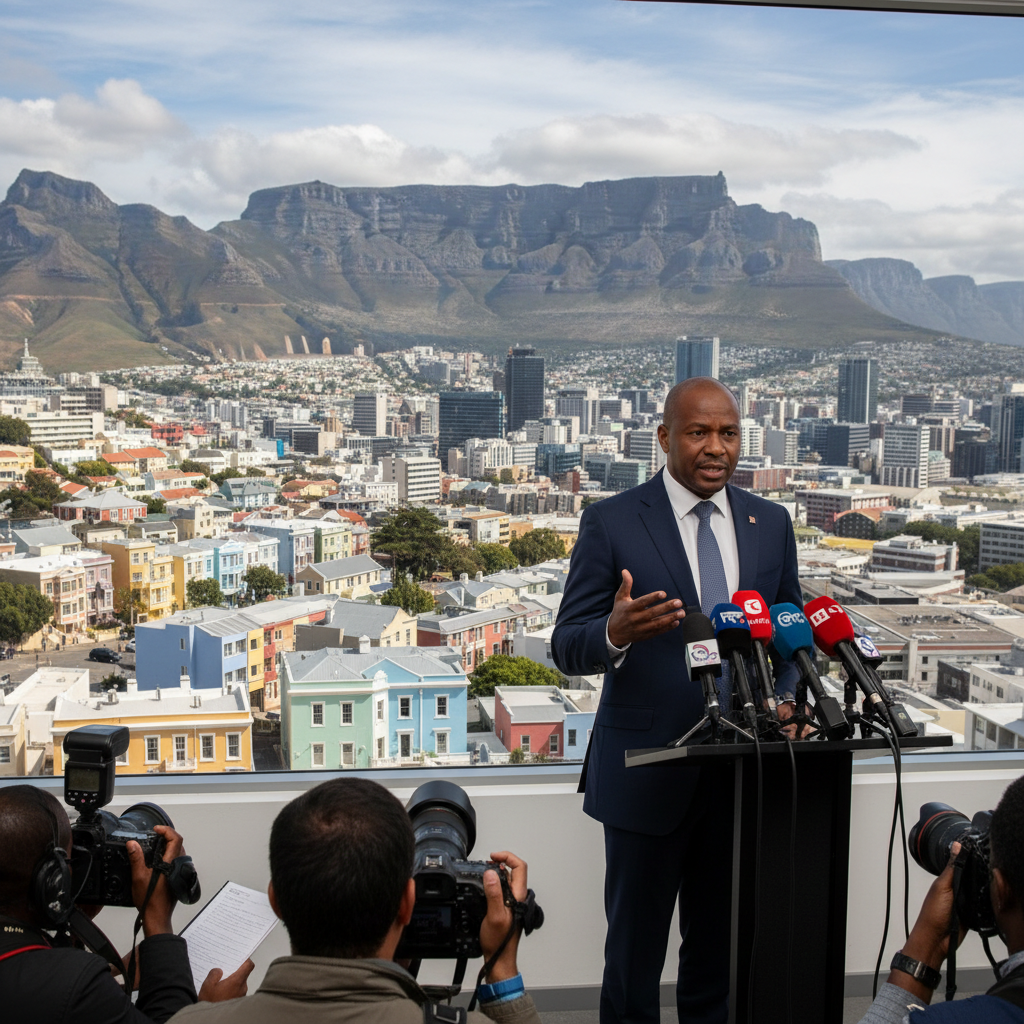
On May 7, 2026, the Democratic Alliance (DA) in Gauteng intensified its call for national intervention in the municipalities of Johannesburg and Ekurhuleni, citing a growing crisis in service delivery attributed to severe financial mismanagement. In a press conference, Gauteng DA leader Solly Msimanga appealed directly to President Cyril Ramaphosa to place Johannesburg under financial administration, a move seen as crucial to restoring effective governance and essential municipal services.
The financial situation in Johannesburg has reached alarming levels, with the city reporting a staggering R25.2 billion in debts, yet possessing only R3.9 billion in cash at hand. This disparity not only raises questions about the city’s ability to meet its obligations but also underscores a broader systemic issue affecting governance in South African municipalities. Msimanga highlighted the inability of current leadership to effect meaningful change during a time of escalating financial crisis, leading to disillusionment among residents relying on basic services.
According to the DA, both Johannesburg and the Ekurhuleni municipalities are in dire straits, with Ekurhuleni also facing significant financial challenges. The party has accused Ekurhuleni's officials of mishandling funds and urged for investigations into allegations of corruption. These concerns include claims that certain city officials allegedly attempted to influence council votes through financial incentives aimed at directing contracts to political allies.
“'The financial crisis in Johannesburg is a wake-up call for all municipalities across South Africa.'”
For many Cape Town residents and stakeholders, the deteriorating situation in Gauteng serves as a salient reminder of the importance of effective governance, irrespective of the municipality’s political affiliation. "What is happening in Johannesburg is symptomatic of a broader negligence of duty among municipal leaders across South Africa," one source from the DA stated, reflecting sentiments that extend beyond the borders of Gauteng.
With parallels often drawn between Cape Town and Gauteng municipalities regarding service delivery, Cape Town faces its own challenges but has generally managed to maintain a semblance of order compared to the chaos currently engulfing Johannesburg. Msimanga’s initiative calls for the attention of decision-makers and citizens alike to consider the implications of continued financial instability. Service delivery crises inhibit development, exacerbate social inequalities, and could potentially lead to public unrest—a situation that South Africa can ill afford.
The DA’s proposal evokes strong reactions amongst the population. While many acknowledge the DA’s commitment to financial accountability and good governance, critics argue that placing Johannesburg under administration alone is not a panacea.
Political analysts suggest that the central government must also take a more significant role in overseeing municipal accountability mechanisms, thereby preventing the occurrence of mismanagement before it escalates into a full-blown crisis. As one analyst noted, “Government oversight is essential, but we must also address the culture of dysfunction inherent in some municipalities.”
The DA's call for national intervention also signals a shift in political dynamics, effectively positioning the party as a steward of good governance amid claims of mismanagement from rival parties. The urgency of Msimanga's request, compounded by the looming elections, presents a crucial test for both the DA and the ruling party in terms of service delivery promises.
Why This Matters This situation underscores significant themes of governance in South African politics. For Cape Town, understanding Gauteng's service delivery issues presents crucial learning opportunities. As municipalities face increasing pressure from citizens to deliver on basic services, the events unfolding in Johannesburg and Ekurhuleni serve to remind us all of the role effective governance plays in social stability. National policies regarding municipal oversight could very well shape the future of urban service delivery across the country.
As the DA calls for stricter interventions and accountability, the implications of these actions may echo throughout South Africa, affecting how municipalities operate and how citizens engage with their local governments. With rising public expectations for service delivery, this crisis may catalyse reforms not only in Gauteng but also inspire change across other provinces.
Thus, as the DA takes this bold stance, viewers from Cape Town and beyond will be closely monitoring developments, possibly awaiting their own municipalities to adopt similar accountability measures, as the national discourse around service delivery continues to evolve.