South Africa's relationship with coffee has changed.
Not gradually. Radically.
What was once treated as a functional part of the day has become something closer to a cultural marker. In cities such as Cape Town and Johannesburg, coffee now exists at the intersection of hospitality, design, lifestyle and status. Cafés have become creative spaces. Espresso bars resemble luxury lounges. Restaurants increasingly approach coffee with the same seriousness once reserved exclusively for wine.
“An espresso is no longer simply an espresso. It is the final note of a fine dining experience overlooking the Atlantic Ocean.”
And sitting quietly within that transformation is L'OR Espresso, a brand that has managed to position itself not simply as a beverage company, but as part of the broader language of modern luxury.
The rise of the experience economy The modern consumer no longer buys products in isolation.
They buy atmosphere.
This shift has reshaped industries across fashion, travel, hospitality and food. Increasingly, what matters is not merely what something is, but how it feels. Coffee, perhaps more than any other everyday product, has benefited from this transformation.
An espresso is no longer simply an espresso.
It is the soundtrack of a business meeting in Sandton. The centrepiece of a morning routine in Cape Town. The final note of a fine dining experience overlooking the Atlantic Ocean.
This is the territory where L'OR Espresso operates with precision.
The brand's identity has been built carefully around elegance and ritual. Black and gold packaging. Refined visual campaigns. An emphasis on indulgence rather than convenience. Even the name itself, derived from the French word for gold, signals aspiration.
The result is a coffee brand that feels closer to luxury fashion than mass retail.
South Africa's premium hospitality scene is evolving fast South Africa's restaurant and hospitality sectors have entered a new era.
Cape Town's culinary scene now competes internationally, drawing tourists and food critics from across the globe. Johannesburg continues to expand as a luxury business and lifestyle destination. Across both cities, consumers are becoming increasingly sophisticated in their expectations.
Details matter more than ever.
The quality of service. The presentation of interiors. The wine list. The ambience.
And increasingly, the coffee.
For years, coffee in restaurants was often treated as an afterthought, a routine ending to the meal rather than part of the experience itself. But modern hospitality culture sees it differently. A badly served coffee can undermine an otherwise exceptional evening. A perfectly crafted espresso, meanwhile, extends the experience beyond dessert.
Luxury restaurants understand this instinctively.
Why premium espresso matters now The growth of premium coffee culture has accelerated globally, but South Africa's evolution feels particularly significant because it reflects broader shifts within the country's urban culture.
Consumers are increasingly drawn toward craftsmanship and authenticity. They are asking questions once reserved for sommeliers and chefs.
Where was it sourced? How was it roasted? What does the brand represent?
Coffee has become emotional.
It is no longer purely about energy or function. It is about identity, ritual and pause within increasingly fast-paced lives.
L'OR Espresso's success lies partly in recognising this shift early. Rather than competing through price or convenience alone, the brand positioned itself around sophistication and sensory experience.
That distinction matters.
The psychology behind luxury coffee There is something deeply personal about coffee rituals.
The sound of a machine beginning its cycle. The aroma filling a room. The quiet first sip before the day begins.
These small moments have become unexpectedly important in modern life because they create pause within environments increasingly dominated by speed and distraction.
Luxury coffee brands thrive because they transform those moments into experiences that feel intentional.
And unlike many traditional luxury categories, premium espresso remains relatively accessible. Consumers who may never purchase designer fashion or luxury cars can still participate in elevated lifestyle experiences through smaller daily rituals.
This accessibility has helped drive the rapid expansion of premium espresso culture worldwide.
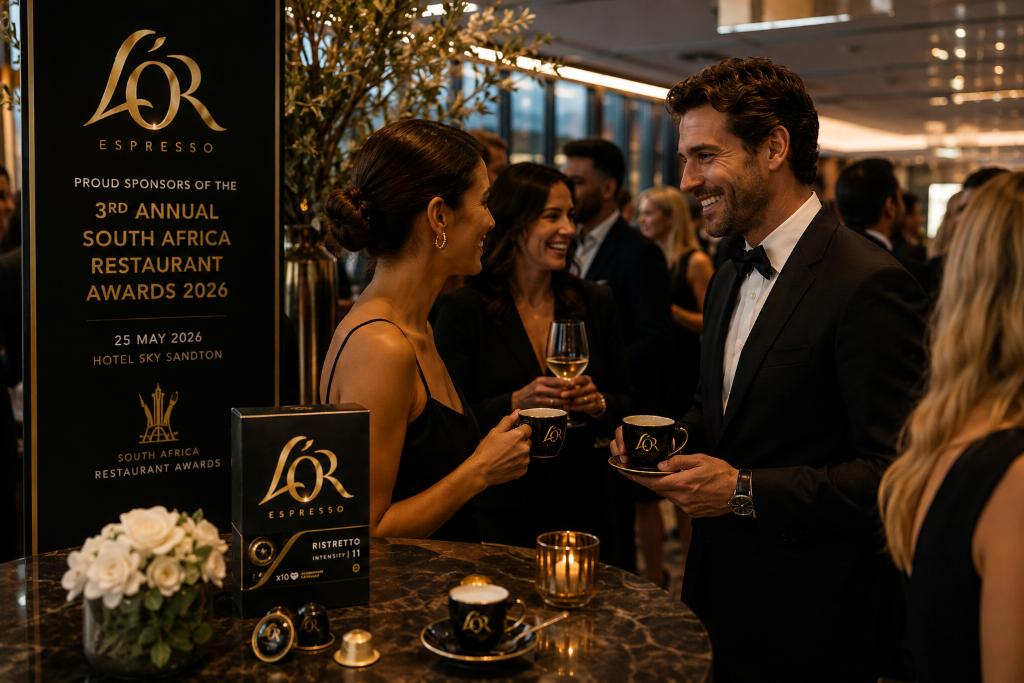
The South Africa Restaurant Awards partnership Against this backdrop, L'OR Espresso's partnership with the upcoming South Africa Restaurant Awards 2026 feels strategically timed.
The brand has officially been announced as a sponsor of the 3rd annual ceremony, taking place on the 25th of May 2026 at Hotel Sky Sandton.
The awards have increasingly become a platform celebrating the country's growing culinary confidence, spotlighting restaurants, chefs and hospitality innovators helping reshape South Africa's global food reputation.
For L'OR Espresso, the sponsorship extends beyond visibility.
It places the brand directly within the country's premium dining conversation.
For guests attending the event, the presence of L'OR Espresso becomes part of the overall sensory identity of the evening itself. A subtle but powerful form of luxury branding.
Coffee as social language Modern coffee culture also functions socially in ways previous generations rarely experienced.
People curate cafés as lifestyle spaces. Meetings happen over espresso rather than in boardrooms. Social media has amplified the visual language of coffee culture itself, transforming cups, machines and café interiors into symbols of taste and aspiration.
This evolution has blurred the boundaries between hospitality, branding and personal identity.
L'OR Espresso appears particularly suited to this environment because its branding already speaks the language of sophistication and visual refinement.
The company is not simply selling espresso capsules. It is selling a version of modern luxury.
The future of premium hospitality in South Africa South Africa's hospitality industry continues moving toward premiumisation.
Restaurants are becoming more ambitious. Consumers more educated. Expectations higher.
Within this environment, partnerships between hospitality platforms and luxury beverage brands will likely become increasingly important. They shape perception. Reinforce standards. Create atmosphere.
And perhaps most importantly, they signal confidence.
Confidence that South African dining culture is no longer emerging, but arriving.
For L'OR Espresso, aligning itself with that moment feels less like sponsorship and more like positioning.
The brand understands something fundamental about modern luxury culture:
People rarely remember only what they consumed.
They remember how it made them feel.