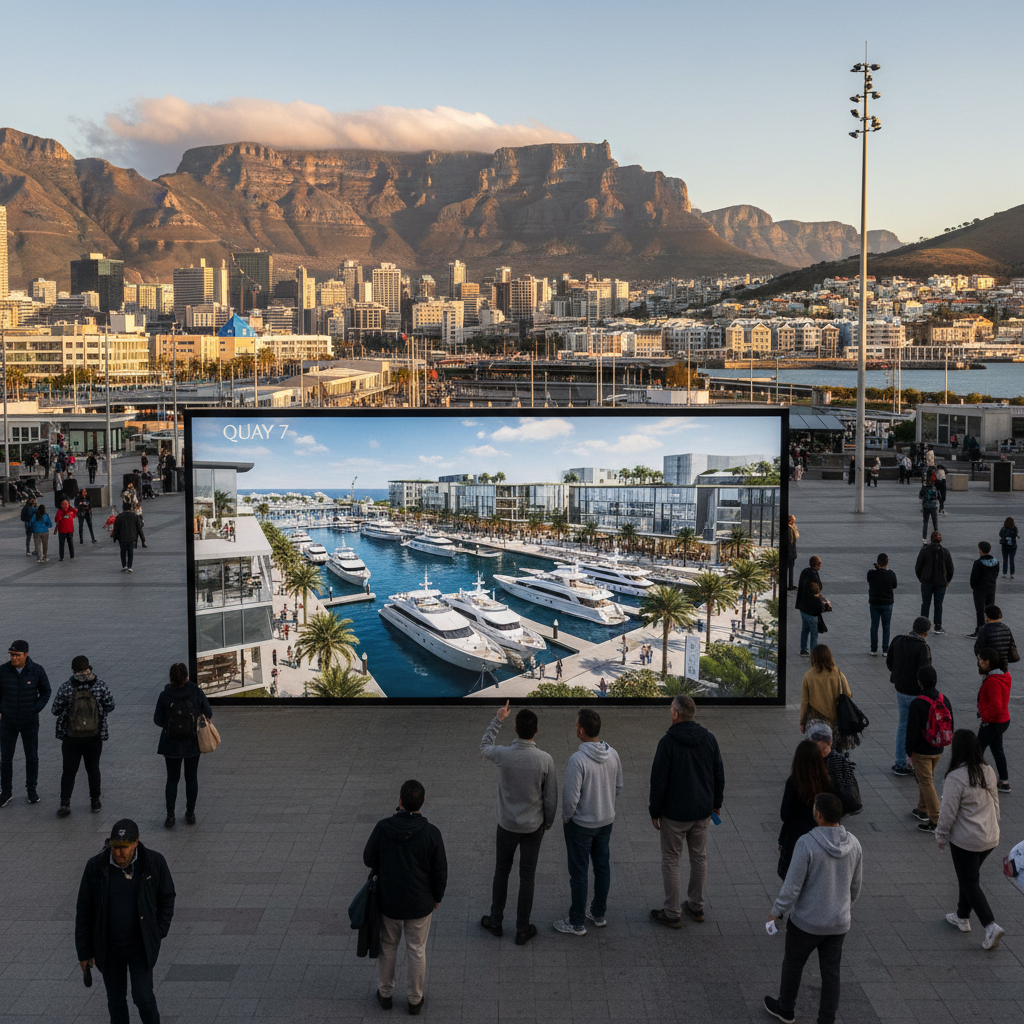
In a move set to revolutionise Cape Town’s marine landscape, plans have been unveiled for the construction of a state-of-the-art superyacht marina at the V&A Waterfront, with an investment of R230 million. The Quay 7 facility, expected to be one of the largest purpose-built marinas in the Southern Hemisphere, will be designed to accommodate luxury vessels ranging from 40 to 90 metres in length. With completion slated for October 2026, stakeholders anticipate that this development will not only enhance the local economy but also position Cape Town firmly on the global yachting map.
The driving force behind the Quay 7 project is Graham Wood, CEO of the V&A Waterfront. According to sources, Wood emphasised that the decision to establish a dedicated facility stems from a robust uptick in the number of superyachts visiting the region. With 35 superyachts expected to dock in the forthcoming 2024/25 season, the demand for high-quality marina services has never been higher.
“The Quay 7 development is not just a response to demand—it’s an acknowledgment of Cape Town’s potential as a luxury destination,” Wood stated at a press conference following the announcement. This statement reflects a growing recognition within the tourism sector that high-net-worth visitors are increasingly choosing South Africa as a key stop in their maritime adventures.
“"Quay 7 will elevate Cape Town as a premier destination for luxury maritime tourism," says Wood.”
The marina is set to include eight exclusive berths specifically designed for the largest luxury vessels, reinforcing the strategic importance of the V&A Waterfront as a prime geographical location for incoming yachts from Europe, the Caribbean, and other popular sailing routes. The project aims to attract not only vessel owners but also crews and guests, who are likely to spend significantly in the city’s retail and hospitality sectors, further stimulating the local economy.
Beyond its economic benefits, the Quay 7 marina is poised to create employment opportunities within the region. As construction ramps up, skilled jobs will be created, while once operational, the marina will require a workforce for maintenance, administration, and hospitality services. Sources indicate that local businesses, particularly those in industries related to luxury tourism, can expect increased foot traffic and new clientele owing to the marina’s presence.
V&A Waterfront is already a popular attraction for both locals and tourists, boasting a range of shops, restaurants, and cultural experiences. The addition of the superyacht marina is expected to draw affluent visitors who are keen to explore Cape Town’s rich offerings, from its stunning natural landscapes to its vibrant culinary scene. Local entrepreneurs and businesses stand to gain by being better positioned to serve a clientele that is looking for premium experiences.
However, the advancements are not without their challenges. The construction of a formidable facility such as the Quay 7 superyacht marina raises concerns around environmental impact and the sustainability of the marine ecosystem in the area. Environmental advocacy groups have expressed their apprehensions regarding potential disruptions to local wildlife and coastal habitats. A report by environmental analysts is currently underway to assess the effects during both the construction phase and the long-term operational phase of the marina.
Graham Wood has acknowledged the concerns put forth by environmentalists and has asserted that the V&A Waterfront is committed to adhering to environmental regulations and best practices. “We believe in balancing development with environmental stewardship and will work closely with the necessary authorities to ensure this project is sustainable,” sources quoted him as saying.
As Cape Town gears up for this transformational project, the local community, government officials, and tourism stakeholders are keenly observing developments. The Quay 7 marina encapsulates the city’s ambition to elevate and diversify its tourism offerings by tapping into the lucrative luxury yacht market. In addition to bolstering tourism revenue, it also signals a step forward in enhancing the city’s image on the international stage.
With only a few years remaining until its completion, many are eagerly awaiting the unveiling of what could become a cornerstone of Cape Town’s maritime economy. Should all go according to plan, the anticipated influx of superyachts will not only draw affluent visitors but might also inspire further investment in Cape Town, fostering growth and innovation within this dynamic sector of the economy.